Cyber Security12/31/2025
The Truth About Cyber Crime in India: What Scammers Really Exploit
Cyber awareness in India must move beyond "Strong Passwords" and "Don't Share OTP." Modern scams use social engineering—like call merging and permission exploitation—to steal data already leaked online. Real security isn't technical; it’s a mindset shift of assuming data exposure, verifying every "urgent" request, and reclaiming your digital privacy.
Special thanks to Amit Dubey Sir for their deep-dive analysis on social engineering tactics, which served as the inspiration for this breakdown.
Every cyber awareness campaign in India repeats the same three slogans: "Use a strong password," "Never share your OTP," and "Don't click suspicious links." While this advice isn’t wrong, it is dangerously incomplete.
Incomplete awareness creates a false sense of security. People think that because they have a complex password, they are safe. But real cyber awareness isn’t about memorizing rules; it’s about understanding the "game" hackers are playing. In 2025, security is less about being technical and more about your mindset.
1. The "Strong Password" Myth: They Don’t Need to Guess
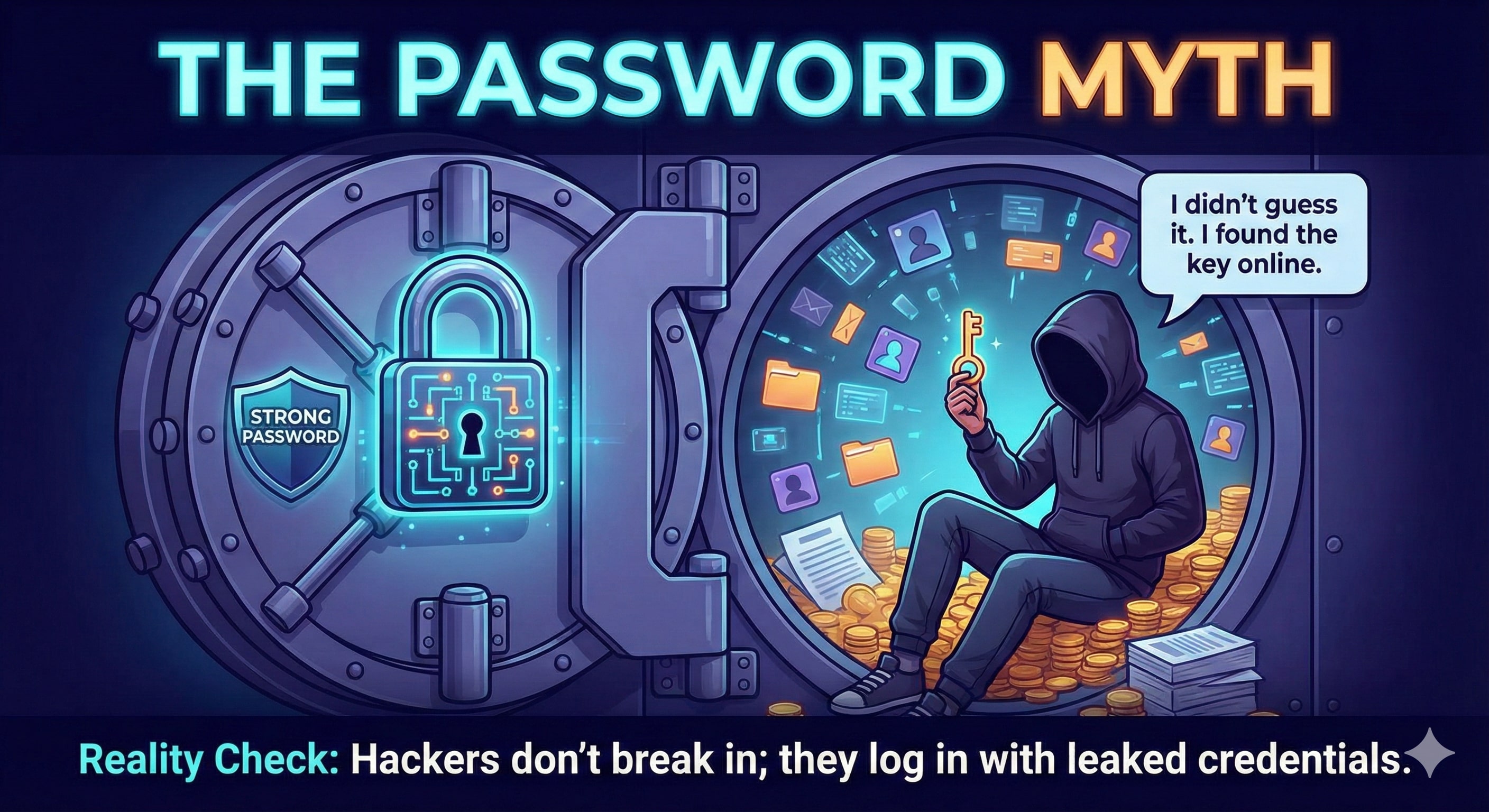 We are constantly told to use special characters and numbers. But ask yourself: When was the last time a hacker actually asked for your password? Almost never. Hackers don’t work like that anymore because they don't need to "break in" when they already have the key.
Your password and personal data are likely already available on the internet due to silent data breaches in apps you used years ago, insecure public Wi-Fi, or even "shoulder surfing" in a crowded metro. The uncomfortable truth is: Your data doesn't need to be stolen from you today—it might already be out there. Real awareness starts when you realize that a strong password alone is no longer a shield if that password has already been leaked.
2. Beyond "Don’t Share OTP": The Art of Manipulation
When campaigns say "Never share your OTP," most people think, "Who would be foolish enough to do that?" Yet, OTP frauds are at an all-time high. Why? Because modern scammers don’t ask for the code directly; they use Social Engineering to manipulate you into giving access.
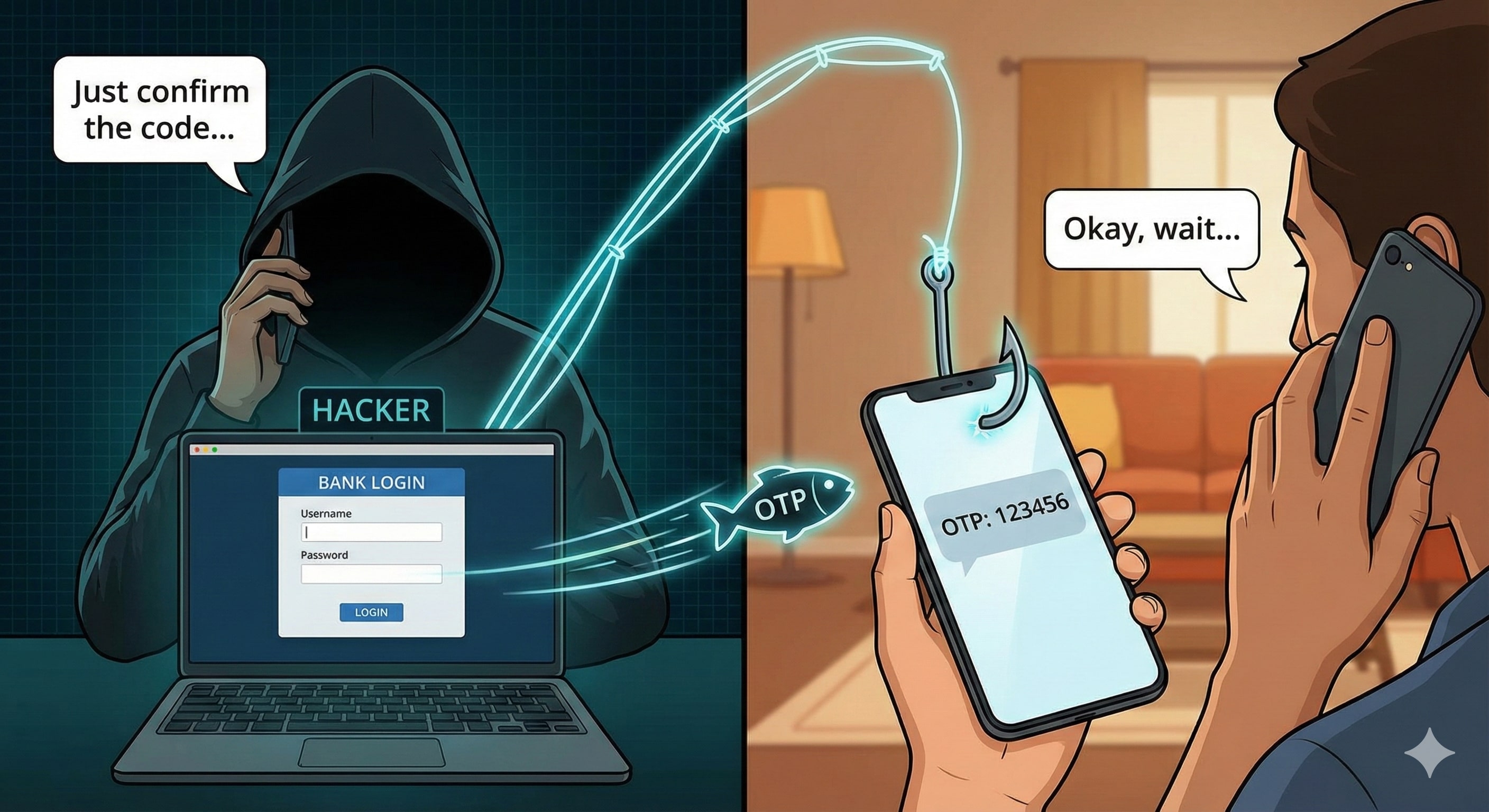 How they bypass the "No OTP" rule:
The Call Merge Trap: A scammer asks you to "merge a call" to speak with a supervisor. While you are on the line, the second call is actually an automated bank verification system reading your OTP. You didn't "share" it; you just stayed on a merged call.
Call Forwarding (401): They trick you into dialing a code like
*401*, claiming it’s for a network upgrade. This silently forwards all your calls—and your voice-based OTPs—directly to the hacker.Screen Sharing: They ask you to install a "support app" (like AnyDesk or TeamViewer) to help fix an issue. Once installed, they see your screen and read your OTP as it arrives.
3. The Trust Trap: "But They Knew My Aadhaar Number!"
The most dangerous mindset in India today is: "They know my details, so they must be genuine." Scammers will often recite your Aadhaar-linked number, your bank name, your address, or even your last transaction to gain your trust.
Where do they get this? It’s not magic. It’s usually from over-permissioned apps. We often give "All Permissions" to random photo editors or utility apps without thinking. If a basic calculator app has access to your SMS and Contacts, it can harvest your entire life. Correct data does not mean a legitimate caller; it just means your digital footprint has been leaked or sold by a data broker.
4. The Mindset Shift: Real Cyber Awareness
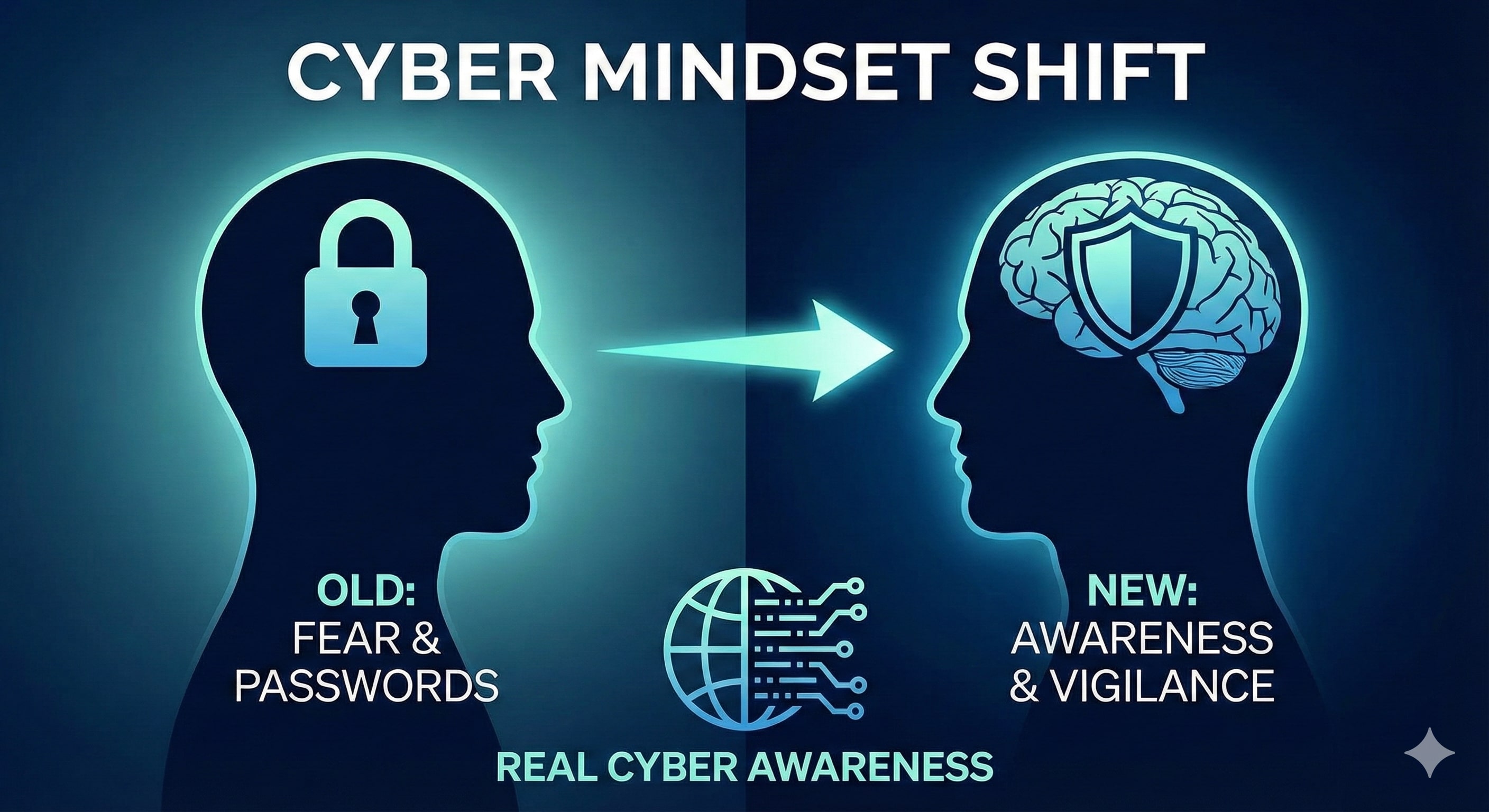
Real cyber awareness is knowledge-based, not fear-based. It starts with one simple assumption: "My data is already on the internet in some form." When you accept this reality, your behavior changes:
You stop trusting unknown callers just because they know your PAN or Aadhaar.
You stop panicking when they threaten "Digital Arrest" or account blockage, because you recognize urgency as a red flag.
You verify instead of reacting. You realize that hackers don’t break systems first—they break your trust and confidence.
 5. Practical Habits That Truly Protect You
To stay safe in today's environment, follow these non-technical, high-impact habits:
Pause Before You Act: Fraud succeeds in urgency; security works in calmness. If a caller creates a "crisis," hang up.
Never Trust Incoming Calls: No bank or government body will ever ask you to merge a call, install an app, or dial a
*401*code.Official Sources Only: If you get a "warning" call, disconnect and dial the number from the official bank website yourself.
Review App Permissions: Periodically check your phone settings. If an app doesn’t need your contacts or SMS to function, remove that access.
Use Passkeys & MFA: Since passwords can be leaked, rely on biometric Passkeys or Authenticator apps that require your physical presence.
Final Thought
Security is not about your IQ or how "tech-savvy" you are. Even experts get scammed when they are caught off guard. Cyber security is about habits, verification, and mindset. When you understand the game, you don’t just protect your passwords—you protect yourself.